

Getting your car ready for its annual checkup comes with one question almost every driver asks at some point: how long is this actually going to take? For most people, the whole thing wraps up in 15 to 45 minutes. Where you fall in that range depends on your state's rules, how well your car has been maintained, what type of check is required, and, honestly, whether you show up on a slow Tuesday morning or a packed Friday afternoon.
This guide covers everything that shapes the timeline, and includes a practical checklist at the end so you're not making two trips.
Quick Answer: How Long Does a Car Inspection Take?
|
Inspection Type |
Avg. Time |
What's Checked |
|
Basic Safety Inspection |
15–30 minutes |
Brakes, lights, tires, steering |
|
Emissions / Smog Check Only |
20–30 minutes |
OBD-II scan or tailpipe test |
|
Combined Safety + Emissions |
30–45 minutes |
Full state inspection |
|
EV Safety Inspection |
15–25 minutes |
No emissions step needed |
|
With Diagnostics / Repairs Found |
45–90 minutes |
Additional mechanic time required |
Key Takeaway: A well-kept car with nothing obviously wrong will almost always clear a combined safety and emissions test in under 45 minutes. Find a problem, though, and that window opens up considerably.
What Is a Car Inspection?
Simply put, it's a government-required check confirming your car is safe to drive and not releasing more pollution than it should. Clear it, and you can renew your registration and keep driving legally. Ignore it, and you're looking at fines or a DMV headache down the road.
Three things drive the whole process:
-
Safety: Catch worn components, thin brake pads, bald tires, before they turn into a roadside emergency
-
Environmental: Confirm the exhaust system is actually controlling emissions the way it's supposed to
-
Legal compliance: Make sure the car meets whatever current standards your state has set
Not every state requires one, and among those that do, the requirements differ quite a bit. A quick look at your state DMV's website before booking will save you from any surprises.
Car Inspection Requirements by State (2026)
|
State |
Inspection Type |
Frequency |
Notes |
|
Texas |
Safety Inspection |
Annually |
Covers brakes, lights, tires, and steering |
|
New York |
Safety + Emissions |
Annually |
OBD-II scan required for 1996+ vehicles |
|
California |
Smog Check (Emissions) |
Every 2 years |
Exempt: EVs, diesel pre-1998, new vehicles |
|
Virginia |
Safety Inspection |
Annually |
Must use a state-certified station |
|
Florida |
No mandatory inspection |
None |
Only applies to vehicle sales |
|
Pennsylvania |
Safety + Emissions |
Annually |
Emissions required in select counties |
|
Illinois |
Emissions only |
Every 2 years |
Required in the Chicago metro area |
These rules change from time to time. Confirm the current requirements with your state's DMV before you go.
What are the Types of Car Inspection
There are several types of car inspections, and each focuses on different systems to ensure your vehicle meets safety and emissions standards. They are:
1. Safety Inspection (15–30 minutes)
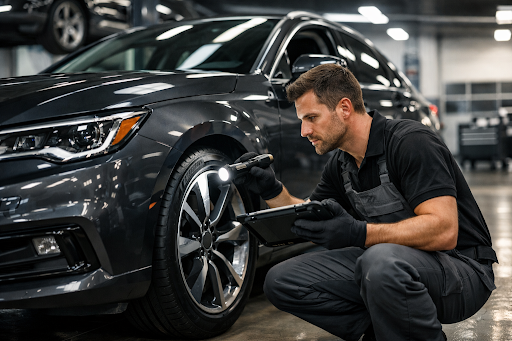
This is a hands-on, eyes-on physical walkthrough of everything that keeps your car controllable and predictable on the road. A certified technician works through each system methodically:
-
Brake system: pad thickness, rotor wear, brake lines, and whether the parking brake holds
-
Steering and suspension: tie rods, ball joints, shocks, and struts
-
Tires: tread depth (the legal minimum is 2/32"), air pressure, sidewall condition, and the spare
-
Lights and signals: headlights, brake lights, turn signals, and hazard lights
-
Windshield and wipers: any cracks or obstructions, plus whether the blades actually clear the glass cleanly
-
Seatbelts: buckle operation, strap wear, and retractor function
-
Horn and mirrors: both need to work and be correctly positioned
2. Emissions / Smog Check Inspection (20–30 minutes)
The goal here is to confirm that your car's pollution controls are doing their job. Depending on the age of the vehicle, the technician will use one of two approaches:
-
OBD-II Scan (1996 and newer): A scanner plugs into the diagnostic port under your dash and reads stored fault codes along with the status of each emissions-related monitor. The scan itself usually takes under 10 minutes.
-
Tailpipe Test (older or diesel vehicles): A probe goes directly into the exhaust pipe to measure what's actually coming out: hydrocarbons (HC), carbon monoxide (CO), and nitrogen oxides (NOx).
-
Gas Cap Test: A quick pressure check to confirm the fuel cap is sealing tight. A faulty cap lets fuel vapors escape into the air, which is enough to trigger a failure on its own.
3. Combined Safety and Emissions Inspection (30–45 minutes)
States like New York and Pennsylvania bundle both checks into a single appointment. The technician covers all the mechanical safety items and then moves straight into the emissions side, so you're not driving to two separate locations. It's the most thorough option, and the one that takes the longest.
4. Electric Vehicle (EV) Inspection (15–25 minutes)
No tailpipe means no tailpipe test. EV appointments skip the emissions portion entirely and focus instead on:
-
Battery cooling and thermal management systems
-
High-voltage wiring and connection integrity
-
Regenerative braking performance
-
Tires, suspension, and steering
-
Exterior lights, horn, and mirrors
Cut out a whole section of the traditional process, and you naturally spend less time at the station. As EVs become more common, more states are adjusting their programs to reflect the difference.
The Car Inspection Process: Step by Step
Most vehicle inspections follow a simple step-by-step process where technicians check paperwork, inspect safety components, and perform emissions testing to ensure your car meets state requirements.
Step 1: Vehicle Check-In (5 minutes)
When you pull in, a staff member confirms your car is eligible, and your paperwork checks out. Have these ready:
-
Current registration
-
Proof of insurance (required in most states)
-
Your VIN for confirmation
One thing people regularly overlook: an already-expired registration can get you turned away before the tech even looks at the car. Deal with that first.
Step 2: Safety Inspection (15–30 minutes)
The technician takes over from here, working through the car in a set order. Most stations will put the car on a lift at some point to get a proper look underneath, brake lines, exhaust components, and suspension hardware that's completely hidden from street level.
A growing number of stations in 2026 now use automated undercarriage scanners that photograph and flag worn components, which reduces subjectivity and speeds up the process.
Step 3: Emissions Testing (10–15 minutes, if required)
For states that require it, the tech connects to an OBD-II scanner, usually plugged into a port just below and left of the steering column. Three things get pulled from the car's computer:
-
Diagnostic Trouble Codes (DTCs): active or pending fault codes signaling something's off
-
Readiness monitors: confirmation that each emissions-related system has finished its self-test cycle
-
Live sensor data: real-time readings to verify everything is performing within spec
One thing catches a lot of drivers off guard: a lit check engine light is an automatic failure, full stop. Doesn't matter if the underlying issue is minor, if that light is on, the test ends there.
Step 4: Final Report and Sticker (5 minutes)
When the tech wraps up, you get a written summary. Pass, and you walk away with a sticker or digital certificate, depending on your state. Fail, and the report tells you specifically what needs fixing before you can come back for a recheck.
What Causes a Car to Fail Inspection?
|
Failure Reason |
Typical Repair Cost |
How to Prevent |
|
Check Engine Light On |
$50–$500+ |
Fix the actual issue first, don't just clear the code |
|
Worn Brake Pads (<2mm) |
$100–$300 per axle |
Have them look at every 12,000 miles |
|
Cracked or Obscured Windshield |
$200–$400 |
Fix chips early before they spread |
|
Exhaust System Leak |
$100–$600 |
Listen for new rattling or hissing underneath |
|
Failed Emissions Readiness Monitors |
Varies |
Drive 50–100 miles after a repair to reset the monitors |
|
Broken or Burned-Out Lights |
$10–$80 per bulb |
Quick walk-around check every month |
|
Tires Below Minimum Tread Depth |
$400–$800 (set of 4) |
Start shopping when tread hits 3/32" |
|
Faulty or Missing Fuel Cap |
$10–$30 |
Replace it at the first hint of a fuel smell |
One useful thing to know: many states have a reinspection grace period, typically around 30 days, where only the items that failed get rechecked rather than the entire car. Ask before you leave so you know what you're coming back for.
Factors That Affect How Long an Inspection Takes
The total inspection time can vary depending on the vehicle’s condition, the inspection station’s workload, and the type of technology used during the inspection process.
1. Vehicle Condition
A regularly serviced car with no warning lights moves through quickly. One that's overdue or showing signs of wear may need extra diagnostic work, anywhere from 20 minutes to well over an hour on top of the standard time.
2. Station Wait Times
The check itself might only take 30 minutes, but factor in a line and your total time at the station can stretch to 60 or 90 minutes. Peak periods to sidestep: Monday mornings, the lunch hour, and the last few days before registrations expire. That final stretch gets surprisingly hectic.
3. Vehicle Age and Complexity
Older cars without onboard diagnostics require more hands-on examination, which takes longer by nature. On the other end of the spectrum, newer cars loaded with driver assistance tech, automatic emergency braking, adaptive cruise control, lane-keeping systems, may need additional electronic checks on top of the physical walkthrough, depending on what equipment the station has.
4. Inspection Station Technology
Some shops in 2026 have upgraded to AI-assisted scanning tools and automated cameras that make certain parts of the process noticeably faster. A camera-based tread analyzer, for example, sizes up all four tires in seconds instead of requiring the tech to crouch down with a manual gauge. Not every shop has made that investment yet, but it's becoming less unusual.
Pre-Inspection Checklist: How to Pass on the First Try
A bit of prep the day before your appointment is almost always worth it. Work through this list, and you'll walk in with reasonable confidence:
Check Engine Light first: If it's on, don't go. You'll fail the emissions portion automatically. Get the issue diagnosed and repaired, let the monitors reset over a normal drive cycle, then book.
-
Tires: Use a gauge to check pressure against the spec on your door jamb sticker, not the number printed on the tire sidewall. For tread, press a quarter into the groove. If Washington's head is fully visible, you're right at the borderline.
-
Brakes: Squealing, grinding, or a pulsing feeling when you press the pedal are all signs worth addressing before the appointment.
-
Lights: Go through every exterior light, low beams, high beams, brake lights, reverse lights, turn signals, and hazards. Get someone to stand outside while you work through each one.
-
Windshield: A crack running through the driver's direct line of sight will fail. Chips near the edges are sometimes let go, but don't count on it.
-
Wiper blades: If they smear or skip, swap them. Most states require wipers that actually give you a clear view.
-
Seatbelts: Pull each one fully out, let it retract, then give it a sharp tug to confirm the lock engages.
-
Horn: Two seconds of pressing is all it takes to confirm it works.
-
Fuel cap: Tighten until you hear it click. A loose or cracked cap causes vapors to leak and will register as an emissions fault.
-
Fluids: Low oil or coolant can trigger dashboard lights that cause a failure even when nothing is mechanically broken yet.
-
Paperwork: Current registration and proof of insurance, don't leave without them.
How Much Does a Car Inspection Cost in 2026?
Prices vary depending on your state and what's being tested:
-
Basic safety check: $7–$30 (many states set a legal maximum)
-
Combined safety + emissions: $20–$70
-
OBD-II emissions scan only: $10–$30
-
Reinspection fee: $0–$25 (varies by state and shop)
States like Texas cap what a station can charge. Others leave it to the individual shop, which means prices can differ noticeably from one place to the next. If a quote seems high, you're generally free to take the car to a different certified station down the road.
What to Remember About Car Inspections in 2026
For a car in reasonable shape, you're looking at 15 to 45 minutes. Safety-only appointments lean toward the shorter end; combined safety and emissions checks tend to take the full 30 to 45. Electric vehicles move a bit faster since the emissions portion doesn't apply.
Your total time at the station will ultimately come down to three things: the condition of your car, how busy the shop is when you arrive, and what your state actually requires. Pull in with a warning light glowing, worn-out brakes, or tires that have seen better days, and you're likely looking at a longer visit, plus a return trip to finish what the first one started.
The smartest move? Work through the checklist above a day before your appointment, get there early when lines are short, and keep up with routine maintenance in between. Cars that get consistent attention rarely cause problems when it's their turn to be checked.
Frequently Asked Questions
Can I drive my car if it fails inspection?
In most states, yes, but only for a set window, usually 10 to 30 days. That's enough time to get the repairs done without losing the ability to drive at all. Letting it drag on indefinitely is a different story; that's technically illegal and can result in a fine if you get pulled over. Look up your state's specific grace period, so you know exactly how much runway you have.
Does the check engine light automatically mean I fail?
In virtually every state that requires emissions testing, yes. An active warning light means at least one system hasn't completed its self-test cycle, and that's an automatic flag in the OBD-II scan, regardless of what the actual problem turns out to be.
How long after a repair do I need to wait before re-inspecting?
This one catches people off guard regularly. After fixing an issue and clearing the codes, the car needs 50 to 100 miles of normal, varied driving before the onboard systems can finish their self-test cycles. Show up too early, and the monitors will still read "incomplete," which the scanner treats the same as a failure.
Are electric vehicles exempt from all inspections?
They're exempt from the emissions portion, yes. But in states that require a separate safety check, EVs still go through that process just like any other car. Check your state DMV's page for the specifics on how electric vehicles are handled where you live.
How long does it take to fully inspect a car?
For a car with no obvious issues, a full combined check runs 30 to 45 minutes. A safety-only appointment typically lasts between 15 and 30 minutes. Once diagnostics or discovered problems get added to the mix, you could be looking at 90 minutes or more.
What do technicians check during a car inspection?
The tech goes through all the mechanical safety components, brake pads, parking brake, tire pressure, steering parts, lights, seatbelts, and the condition of the windshield. If emissions testing is also on the agenda, they'll scan the car's computer system and, on older vehicles, test tailpipe output directly.
Why can a car inspection take longer than expected?
Usually, it comes down to one of three things: extra diagnostic work is needed, there's a wait at the station, or the tech finds something during the walkthrough, a brake issue, an exhaust leak, an emissions flag, that needs more investigation before they can sign off.
What should you do to prepare for a car inspection?
Run through the basics at home: tire pressure, how the brakes feel and sound, all exterior lights, and windshield condition. Above all, make sure no warning lights are on, and there are no obvious leaks underneath. A little preparation consistently beats a second trip.
Read more
The true cost of a vehicle inspection, what’s included, and how to save money with this quick, no-nonsense pricing guide.
Our Customer satisfaction is high, the user experience is genuinely seamless, and adoption across the auto repair industry continues to grow.